Health and Safety Policy for Flat Clearance Hayes
 This Health and Safety Policy sets out the responsibilities and procedures for staff, contractors and visitors involved in flat clearance Hayes operations. The policy is intended to reduce risk during rubbish removal activities, protect the health of workers and the public, and ensure compliance with general safety principles relevant to waste and rubbish clearance services. It applies to all sites where flat clearance, furniture removal and waste disposal are carried out under our management.
The key objectives are to: ensure safe systems of work, prevent accidents and incidents, and maintain a consistent approach to rubbish clearance services. All personnel must be familiar with this policy, and managers are required to implement and monitor effective controls. Safety culture is promoted from induction through ongoing training, and every worker has a duty to raise hazards and near misses.
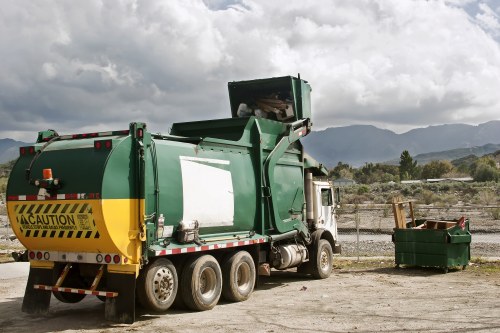
Responsibilities and Duties
Management must assess risks associated with every flat clearance, provide adequate resources, and appoint competent supervisors. Employees are expected to follow safe operating procedures, wear required personal protective equipment (PPE) and report hazards immediately. Contractors engaged for rubbish removal Hayes work must comply with this policy and provide evidence of their competence. The following list summarises core duties:
- Risk assessment – identify hazards including manual handling, sharp objects, hazardous materials and fall risks.
- Training – provide instruction for safe lifting, waste segregation and use of mechanical aids.
- Equipment – maintain vehicles, trolleys and PPE in a safe condition.
Procedures cover pre-clearance site checks, communication of hazards, permitting for hazardous waste, and incident reporting. For rubbish removal Hayes projects, job-specific briefings should be completed at the start of each shift. Supervisors must confirm that all team members understand the work plan and emergency arrangements.
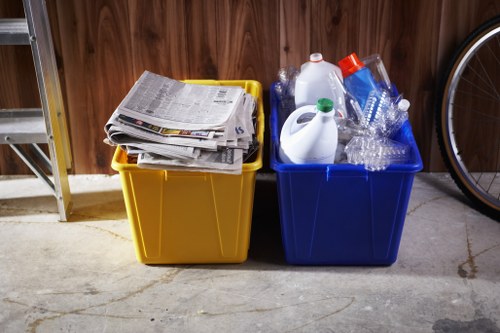
Risk Management and Control Measures
Controls for the flat clearance service include segregation of waste types, secure containment of sharp or broken items, and careful handling of bulky furniture. Mechanical aids (trolleys, sack trucks, lifting straps) should be used to reduce manual handling load. Where hazardous substances are found, such as asbestos-containing materials or chemical containers, work must stop and a qualified specialist engaged. Regular housekeeping reduces slip, trip and fall hazards, and rubbish must not be stacked in escape routes.Vehicle safety forms a crucial part of our waste removal operations. Drivers must carry out vehicle checks, ensure appropriate load restraint and follow safe loading practices on site. Parking and access plans must consider pedestrian safety and local traffic flow. For large-scale flat clearances, a traffic management plan should be prepared to protect operatives and members of the public.
Emergency preparedness includes clear procedures for first aid, fire response, and dealing with chemical spills. First aid kits and spill kits must be available on-site. Employees should be aware of evacuation routes and assembly points. In the event of an incident during a rubbish collection or waste disposal task, the supervisor must secure the scene, provide first aid if necessary and report the event for investigation.
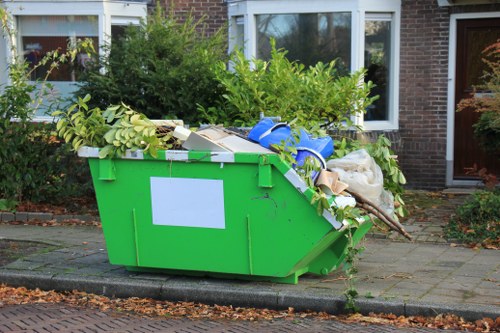 Training, Monitoring and Review
Effective training underpins safe flat clearance activities. This includes manual handling instruction, PPE use, sharps and hazardous waste awareness, and safe vehicle operation. Managers must carry out regular safety audits, toolbox talks and observations of rubbish collection tasks to ensure compliance. Records of training, risk assessments and inspections should be kept and reviewed periodically.
Training, Monitoring and Review
Effective training underpins safe flat clearance activities. This includes manual handling instruction, PPE use, sharps and hazardous waste awareness, and safe vehicle operation. Managers must carry out regular safety audits, toolbox talks and observations of rubbish collection tasks to ensure compliance. Records of training, risk assessments and inspections should be kept and reviewed periodically.
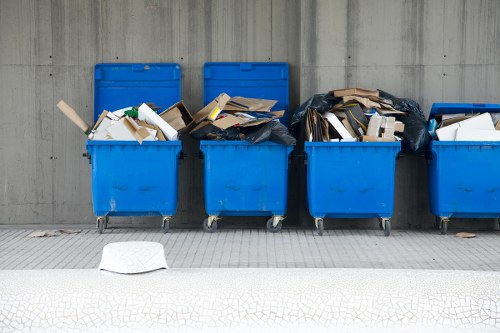
Health Considerations and Occupational Welfare
Staff welfare is essential. Workers involved in clearances may be exposed to dust, mold, biohazards and noise. Control measures include appropriate respiratory protection, gloves, protective footwear and eye protection. Rotating tasks and taking regular breaks reduces fatigue during extended flat clearance shifts. Occupational health support should be offered where necessary for issues such as musculoskeletal complaints or respiratory concerns.COVID-19 and other transmissible disease precautions should be followed where relevant, with hygiene measures, hand-washing facilities and appropriate distancing applied during rubbish collection activities when required. Vaccination and health surveillance measures are encouraged in line with broader public health guidance.
Policy Review and Continuous Improvement
This policy will be reviewed at regular intervals and following any significant incident. Lessons learned from incident investigations and feedback from staff will inform changes to procedures, training and equipment. Continuous improvement ensures that our flat clearance and rubbish removal services remain safe, compliant and responsive to emerging risks. All workers are encouraged to contribute to safety improvements by reporting hazards and suggesting practical measures.Approval: This Health and Safety Policy is endorsed by senior management and is mandatory for all personnel engaged in waste removal, rubbish clearance or flat clearance services. Compliance with this policy is a condition of employment or engagement for all staff and contractors.