Recycling and Sustainability for Flat Clearance Hayes
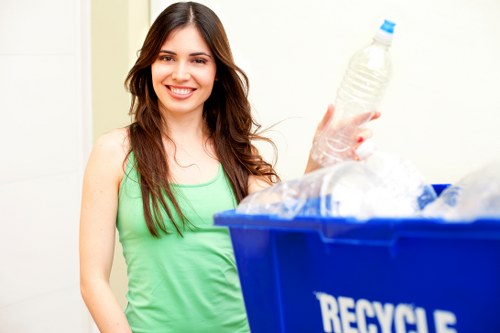 Flat Clearance Hayes is committed to delivering an eco-friendly waste disposal area approach across every project. Our Hayes flat clearance teams prioritise reuse, recycling and low-impact disposal so that the environmental footprint of a flat or property clearout is minimised. We work with local borough systems and community groups to make sure that nothing useful is sent to landfill when it can be repaired, repurposed or recycled instead. Every collection is planned with sustainability in mind, from sorting at source to selecting the right downstream partners.
To measure progress we have set a clear recycling percentage target for our operations: a minimum of 75% diversion from landfill within three years for all items collected during Hayes flat clearance services. That figure represents materials that are reused, repaired, donated or recycled into new products. Our target is aggressive but achievable because we combine careful on-site segregation with partnerships with reuse networks and specialist recycling facilities. Setting measurable goals helps clients and the local community see the environmental benefit of choosing responsible flat clearance in Hayes.
 Our strategy aligns with the wider borough approaches to waste separation — including separate food waste, paper and card, mixed dry recycling and small electrical waste streams — so our teams can integrate with council-led collections or divert items to appropriate transfer stations. By coordinating collections to complement the Hillingdon and neighbouring boroughs' recycling schemes, we reduce double handling and ensure materials reach the most appropriate local transfer stations and civic amenity sites quickly and efficiently.
How our sustainable rubbish area and recycling process works
When you book Hayes flat clearance, our crew arrives with a clear plan. Items are categorised into reuse, donation, recyclable and residual. Wherever possible we prioritise repair and reuse — furniture and household items in good condition are prepared for donation or resale through charity partners; broken items go to specialist recycling streams. We use colour-coded crates and clear labelling so the separation happens on-site, reducing contamination and boosting recycling quality. Good segregation at source increases the percentage of materials we can divert.
 We also work closely with local transfer stations and licensed materials recovery facilities to process separated streams. Examples of the kinds of materials we routinely redirect include:
- Wood and bulky furniture for reuse or chipping into biomass or processed timber
- Metals and scrap diverted to metal recyclers
- Small WEEE (waste electrical and electronic equipment) sent to specialist facilities
- Paper, cardboard and mixed packaging recycled through local MRFs
We maintain strong links with multiple local transfer stations and civic amenity sites managed by London boroughs and private operators. These legally permitted hubs allow us to consolidate loads, reduce vehicle miles and ensure materials enter high-quality recycling streams rather than ending up in residual waste. The short travel time to these transfer points from Hayes also helps lower overall emissions for each job.
Charity partnerships, community reuse and low-carbon vans
Partnerships with charities are central to our reuse-first philosophy. We regularly collaborate with national and local organisations including registered charities and community reuse shops to give furniture, household items and clothing a second life. Donations go to beneficiaries across Hayes and the surrounding boroughs, supporting local social causes while keeping materials in use. Donation and reuse reduces waste and strengthens community resilience.
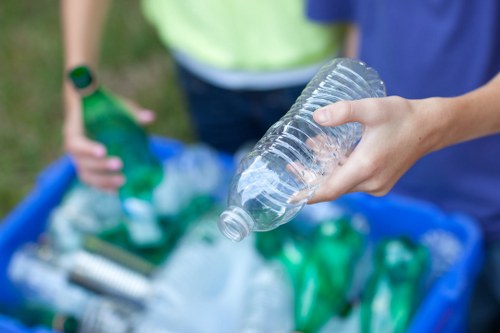 Our vehicle policy supports a low-carbon future for Hayes flat clearance. We operate a mixed fleet of low-emission vans and electric vehicles, investing in electric vans where urban routes and charging infrastructure allow. Route optimisation software is used to minimise mileage and idle time, and we prioritise EVs or Euro 6 low-emission vehicles for inner-London trips. These choices reduce particulate and CO2 emissions associated with removals and rubbish collections.
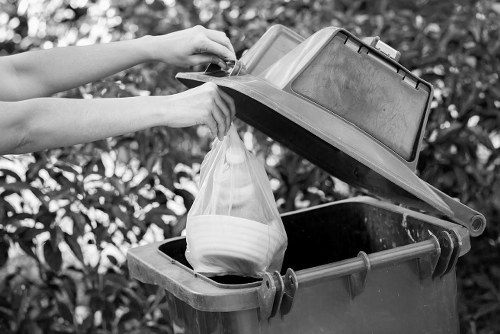 In addition to transport upgrades, we monitor our carbon footprint across the whole service, from collection to processing. By combining local transfer station use, charity redistribution and high-quality recycling streams, our aim is to create a sustainably managed rubbish area for every property clearance. Clients choosing Hayes flat clearance services can expect transparent reporting on recycling rates and the fate of diverted materials, reinforcing trust and accountability.
Our commitments at a glance:
- 75% recycling and reuse target for all clearances within three years
- Partnerships with charities and local reuse shops to maximise donations
- Use of low-carbon vans and EVs to reduce transport emissions
- Coordination with borough-led waste separation schemes and transfer stations
- Transparent reporting on material destinations and diversion rates
Choosing a sustainable approach to flat clearance in Hayes means more than ticking boxes — it delivers environmental benefit, community support and responsible resource management. Our combined focus on a designated sustainable rubbish area, charity partnerships, local transfer stations and low-carbon transport means your clearout can be both efficient and ethical. If you value a greener, more circular approach to waste, our Hayes flat clearance teams are structured to make that vision a reality.
We believe every cleared flat is an opportunity to recover value, help our community and protect the local environment.